
Family Roles & Responsibilities
Giving birth to a healthy, intellectually thriving child is never the burden of the mother alone. It is a shared biological, emotional, and social covenant uniting Mothers, Fathers, Adolescents, and the Community.
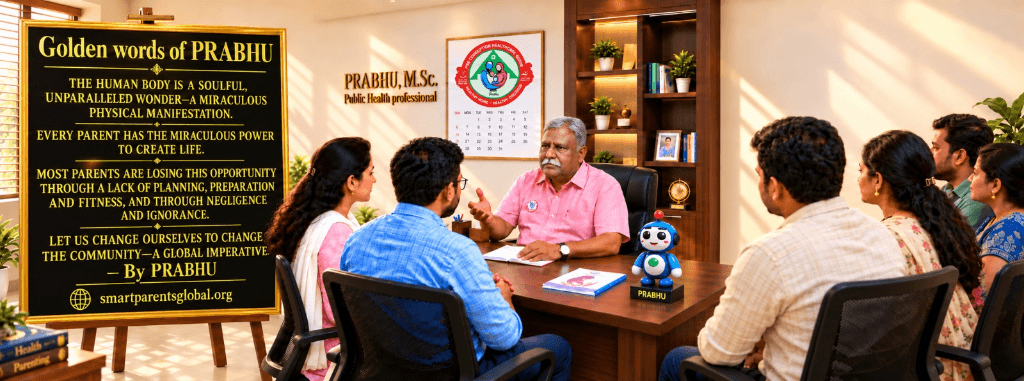
40 Years of Family Health Guidance by Prabhu, M.Sc.
“Just as a bumper harvest requires fertile soil, clean seed, and caring hands, a healthy child demands the prepared readiness of both mother and father, protected by community love.”
Mother’s Role — The Pillar of Life and Harmony
From the dawn of civilization, wisdom and tradition have given the highest position to women, recognizing them as the source of creation and continuity of life. A mother is like the Earth itself — tolerant, nurturing, and infinitely patient — carrying the capacity to sustain family, society, nation, and the world community. She embodies strength, sacrifice, and compassion, and is mainly responsible for the harmonious life of the family and society. Her role is honoured with importance, respect, and recognition, yet she often faces disparity, inequality, and maternal humiliation in real life. Despite these challenges, she remains the foundation of human progress, the first teacher of values, and the guardian of future generations. In her womb begins the miracle of life; in her heart resides the peace of the world.
Awareness and Acceptance
Pregnancy outcomes are not fate, destiny, or punishment for past sins. They depend on health, preparation, and care.
If Neglected: Fatalistic beliefs lead to negligence, missed medical care, and preventable complications.
Source: WHO stresses that maternal and child health outcomes are shaped by modifiable risk factors, not destiny.
Preconception Care — The Foundation
Preconception care is the base of healthy pregnancy, ensuring fitness before conception. It includes medical screening, nutrition, and lifestyle adjustments.
If Neglected: Nutrient deficiencies, untreated infections, and hormonal imbalances can cause infertility, miscarriage, or birth defects.
Source: WHO (2013) — Preconception Care: Maximizing Gains for Maternal and Child Health.
Physical Fitness and Readiness
A mother’s body is the first home of the baby. Fitness through exercise, balanced diet, and medical checks ensures readiness.
If Neglected: Weak physical condition increases risks of gestational diabetes, hypertension, and premature birth.
Pelvic and Reproductive Health
Healthy uterus, ovaries, and hormonal balance are essential for conception. Early treatment of infections or fibroids ensures womb suitability.
If Neglected: Chronic pelvic issues may lead to infertility, ectopic pregnancy, or repeated miscarriages.
Nutritional Responsibility
Adequate folic acid, iron, calcium, and vitamins prevent birth defects and support brain development.
If Neglected: Deficiency causes neural tube defects, anemia, low birth weight, and impaired cognitive growth.
Source: WHO recommends folic acid supplementation to prevent neural tube defects.
Emotional Stability and Mental Peace
A calm mind nurtures a calm child. Managing stress and maintaining emotional harmony are vital.
If Neglected: Anxiety and depression during pregnancy can affect foetal growth and lead to behavioural issues in children.
Lifestyle Discipline
Avoiding alcohol, tobacco, and harmful habits protects fertility and foetal development.
If Neglected: Substance exposure can cause miscarriage, stillbirth, or lifelong disabilities in the child.
Age and Timing Awareness
Understanding the biological clock ensures timely conception.
If Neglected: Delayed pregnancy beyond 30 years reduces egg quality and increases chromosomal abnormalities.
Source: WHO notes advanced maternal age as a risk factor for adverse outcomes.
Obesity and Body Balance
Healthy body weight supports hormonal balance and fertility.
If Neglected: Obesity increases risks of gestational diabetes, hypertension, and cesarean delivery.
Dispelling Economic Myths
Pregnancy success depends on health, not wealth. Bio Proof: Healthy soil → Healthy seed → Healthy fruit; Healthy womb → Healthy sperm → Healthy child.
If Neglected: Believing status determines outcomes leads to complacency and neglect of essential care.
Environmental and Social Safety
Avoid toxins, pollution, and unsafe workplaces.
If Neglected: Exposure to chemicals or radiation can cause congenital defects or pregnancy loss.
Partnership with Father
Motherhood begins with shared responsibility. The father’s health and emotional support are equally vital.
If Neglected: Lack of paternal involvement increases stress and weakens family harmony.
Moral and Social Leadership
Every mother is a teacher of values and health awareness. By practicing preconception care, she inspires other women and uplifts community health.
If Neglected: Society loses its moral foundation and future generations grow without guidance or empathy.
Closing Message
Pregnancy is not fate — it is preparation. Preconception care is the first act of love and responsibility from both parents. Healthy womb + Healthy sperm + Healthy choices = Healthy child. Healthy parents → Healthy children → Healthy society → Healthy world.
If Neglected: Unprepared conception leaves child wellbeing to chance rather than science-backed protection.
Ready to assess your couple readiness score?
Use our clinical 9-point checklist and ovulation calculator to plan your pregnancy with scientific confidence.